
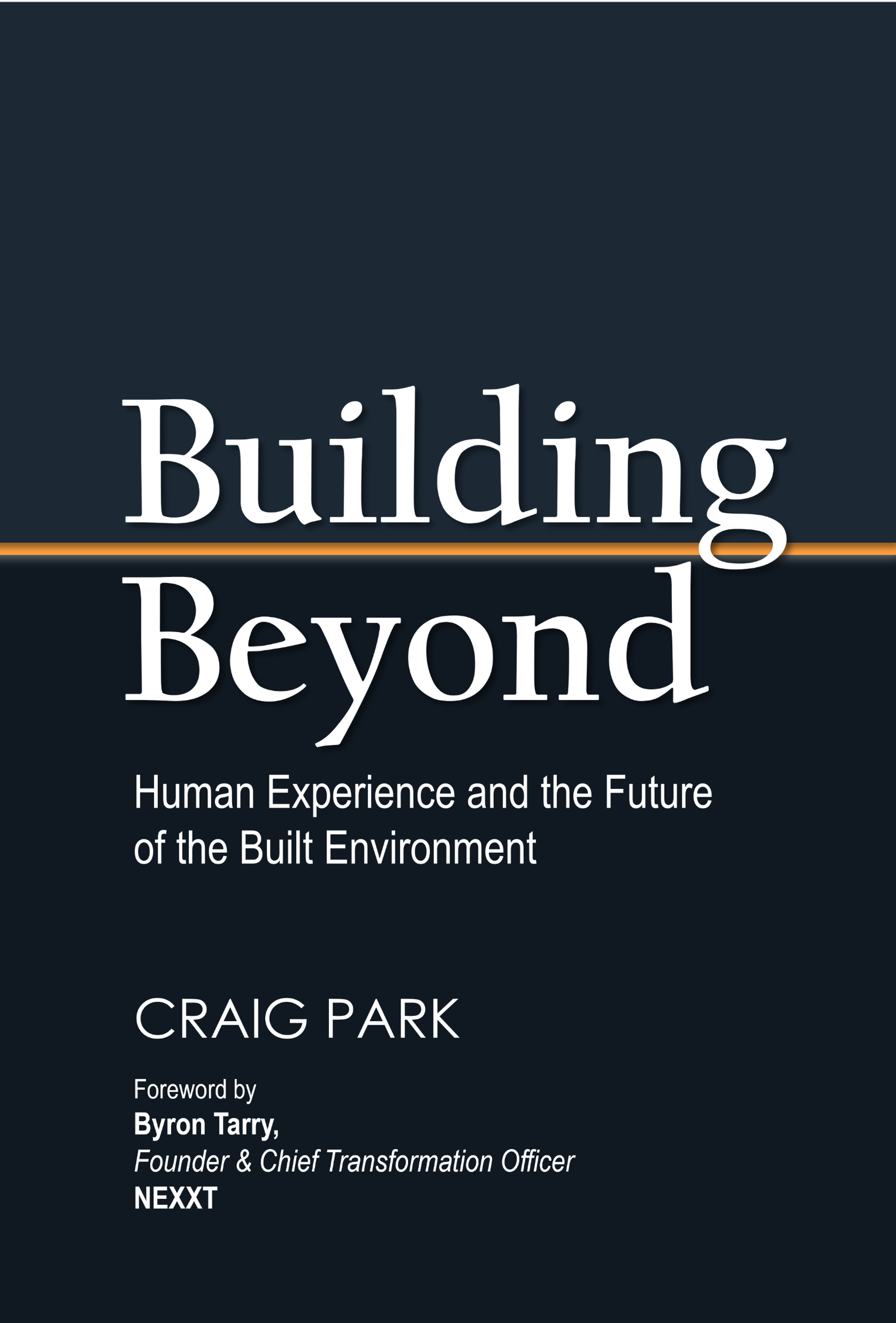
Building Beyond
Human Experience and the Future of the Built Environment
Buildings will keep getting smarter. That much is settled, and it is not the interesting question. The interesting question is whether they will get better for the people who work, heal, learn, and gather inside them.
Craig Park · Foreword by Byron Tarry, Founder & Chief Transformation Officer, NEXXT
Nothing is broken. That is the problem.
Every system in the room works. The display works, the network works, the platform works — and the meeting still starts nine minutes late while someone hunts behind the credenza for the right cable. Each party delivered its scope. Each system passed commissioning. The failure lives in the seams between them, and no one owns the seam.
Most of us have spent our careers inside that pattern. A new wave of capability arrives every few years with the same promises, and every few years another layer of underused features settles into the buildings that believed them. The cause is rarely the technology. It is the missing purpose, the missing operating discipline, and the boundary between specialties that no contract ever assigned.
Intelligence is now being installed at scale into buildings that will stand for decades. It inherits the seam rather than repairing it — and when an inference fails, it fails quietly, with no one to attribute it to. The habits that produced decades of disappointing rooms are about to be locked into walls, ceilings, and budgets. That is why this book, and why now.
Human experience is the infrastructure.
Building Beyond makes one claim and follows it all the way through. Human experience is not an amenity laid over the real work. It is the thing every other system in the building exists to produce — and the whole has to be designed as one thing, not as a stack of separately competent parts.
The book gives you three tools to do that:
One rule runs underneath all of it: do not begin with the catalog. The framework works as readily on a hospital as on a permit office, because only the human function at the top changes.
For the people who own a piece of the building and want to own the whole.
Architects and interior designers
Who are tired of watching the experience they drew get value-engineered into a room that merely functions.
AV, IT, and technology consultants
Whose systems pass every test and still disappoint the people using them.
Facilities and workplace leaders
Who inherit what everyone else designed and are asked to make it work on Monday morning.
Owners and executives
Writing the checks for intelligent buildings who want to know what they are buying, and who will be accountable for it.
If your job sits on one side of a seam, this book is about the other side, and the space in between.
"Craig gives our ambition a practical foundation: a way to question familiar answers, explore the trade-offs and approach decisions we still need to make while the future remains uncertain."
Byron Tarry
Founder & Chief Transformation Officer, NEXXT
"The opportunity, and the constructive discomfort it creates, have somewhere to go."
Four parts, sixteen chapters, and the instruments to use them.
The Case for Experience
Why intelligent buildings disappoint the people inside them, and why experience belongs in the infrastructure rather than on top of it.
The Framework
The five layers, the operational maturity model, governance and ethics, and how to measure what was promised.
The Framework in Practice
The adaptive workplace, the clinical environment, learning environments, civic and community spaces, and what carries across all of them.
The Next Horizon
AI as an environmental layer, designing for futures no one can specify, and an implementation roadmap built to be used on a real project this year.
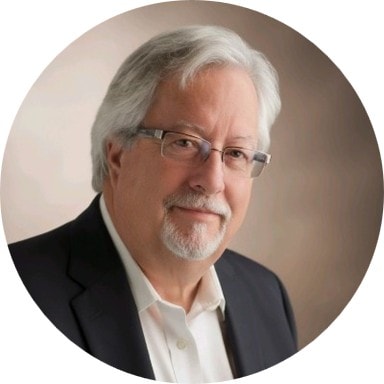
Craig Park
Author
Craig Park has spent more than four decades designing the environments people work, heal, learn, and gather in — hospitals, campuses, workplaces, courthouses, and concert halls. Trained as an architect and practiced as a technologist, he has watched the same failure repeat across every one of those building types, in every generation of technology, and he wrote this book to name it and to fix it.
He is a Fellow of SMPS, an Associate AIA, and a member of AVIXA since 1986, including service on its national board. His writing has appeared in Sound & Video Contractor, Planning for Higher Education, Facilities Manager, and Corporate Real Estate Journal. Building Beyond joins his books on professional practice, including The Architecture of Vision.
He lives in Georgetown, South Carolina.
Start with the book. Then start with one room.
Coming soon in paperback and ebook. Leave your email and we'll tell you the day it ships — along with the first chapter, free.
For teams and firms
Ordering ten or more copies for a project team, a practice group, or a client workshop? Write to us for bulk pricing and a facilitated session built around the book.
Contact us about bulk ordersBring the conversation to your organization
Craig speaks to design firms, owners, and industry groups on the seam problem and what to do about it.
Inquire about speakingOne essay a week on buildings, people, and the seams between them. No hype, no catalog.
The Eagle's View
Thought leadership for professional services firms — strategy, brand, and practice management.